Parkinson’s Disease Patient Uses Magic – And Deep Brain Stimulation – to Manage Symptoms
The following article is a sponsored post
For David R., magic is more than a hobby. Photo used with permission from David R.
Living with Parkinson’s Disease
Do you believe in magic? For David R., magic is more than a hobby – it’s a lifeline. Diagnosed in 2013 with Parkinson’s disease (PD), a progressive neurological condition with no known cure, David faced challenges with muscle rigidity and slowness that affected both his career as a nurse and his everyday life.
Magic as Therapy
As a form of physical therapy, David began teaching himself magic tricks to help maintain dexterity. Before long, he was completely hooked on the hobby. By 2019, David had become a skilled magician – using sleight of hand to impress audiences of all ages and help maintain his fine motor skills despite his PD symptoms. He also founded a non-profit organization, Slow-Motion Magic, dedicated to raising awareness about the disease and encouraging further research for an eventual cure.
Discovering Deep Brain Stimulation (DBS)
Parkinson’s Disease is progressive, meaning symptoms worsen over time. Medications are often helpful, but they can become less effective as the disease progresses. As David’s symptoms worsened, his doctor told him about deep brain stimulation (DBS). DBS works by sending mild electrical signals to a targeted portion of the brain through a small, implanted device called a stimulator. These signals can help improve movement symptoms such as stiffness, tremors and slowness.
Vercise Genus DBS System
After further consultation with his doctor, David had Boston Scientific’s Vercise Genus™ Deep Brain Stimulation System implanted in 2025. With image-guided programming, David’s doctor was able to precisely target the region of David’s brain responsible for his movement disorder symptoms. Following the operation, David and his healthcare team worked together to program the DBS system – a painless process involving multiple micro adjustments to the electrical current. For David, the results were immediate. After the initial programming was completed, he could fully relax his arm for the first time in more than a decade. Overcome with relief, he cried.
Life After DBS Surgery
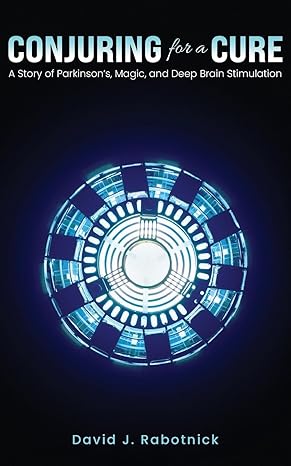
David says he regained about 80 percent of his range of motion following his DBS procedure. While results may vary, David believes DBS “has given me years back, and my identity as a magician – who I am – is restored.” He was inspired enough to write a book titled Conjuring for a Cure, recapping his experience using magic and medical technology to battle his disease.
Today, David frequently performs his magic at the famed Magic Castle in Los Angeles and at other local events. He and his wife, Robyn, also recently hiked in Yosemite National Park, something he once thought was out of reach. When the time comes, David looks forward to holding his future grandchildren in his arms which were previously impacted with rigidity and slowness.
Learn More About Parkinson’s and DBS
Deep brain stimulation has helped an estimated 244,000 people worldwide regain control of their movement and independence in daily life.¹ Visit DBSandMe.com to learn more about Parkinson’s Disease and DBS therapy.
This article was provided by Boston Scientific Corporation.
Results from case studies are not necessarily predictive of results in other cases. Results in other cases may vary. Talk to your doctor about the risks and benefits of deep brain stimulation and if it is an option for you.
SPONSORED BY:
¹Sandoval-Pistorius SS, Hacker ML, Waters AC, Wang J, Provenza NR, de Hemptinne C, Johnson KA, Morrison MA, Cernera S. Advances in Deep Brain Stimulation: From Mechanisms to Applications. J Neurosci. 2023 Nov 8;43(45):7575-7586. doi: 10.1523/JNEUROSCI.1427-23.2023. PMID: 37940596; PMCID: PMC10634582.




 Life After DBS Surgery