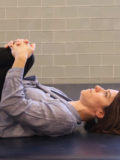



Strength training can help you keep doing the activities you enjoy. Photo: Deposit Photos
Lifting your carry-on into the overhead bin. Climbing the last steep steps to a lookout. Scooping up a grandchild who wants to be held right now. Strength is what turns plans into things you can actually do, and it quietly shapes how independent you stay as the years go by.
Now there’s another reason to pay attention to your muscles. A major study published this year links greater strength with a longer life. The good news: you can build strength later in life, and you don’t need a gym membership or heavy barbells to start.
What Research Reveals About Muscle Strength As You Age
In a study published in February 2026 in JAMA Network Open, researchers followed more than 5,000 women ages 63 to 99 for about eight years. They used two simple tests your doctor might give you:
- Grip strength: how hard you can squeeze a handheld device.
- Chair stands: how quickly you can stand up from a chair five times without using your arms.
Participants also wore activity monitors, so researchers knew how much each woman moved and how long she sat.
Women with the strongest grips had about a 30% lower risk of dying during the study than women with the weakest grips. That held true even after researchers accounted for physical activity, sitting time and other health factors. Women who finished the chair stands fastest also had a lower risk.
What this means for you: Strength appears to tell us something about health that step counts and workout minutes alone don’t capture.
What it doesn’t mean: This kind of study shows a link, not proof that getting stronger will add years to your life. Because it included only older women, the findings may not apply to everyone. Still, it adds to evidence that strength deserves a place in your weekly routine.
The Strength You Build Can Last
Here’s the encouraging part: research in both men and women shows that strength training can make a lasting difference.
In a Danish study published in 2024, adults around retirement age were assigned to one of three groups for a year: heavy resistance training, moderate training or no structured program. Four years after the study began, the heavy-training group still had the leg strength they started with. The other two groups had lost strength.
That heavy-training group didn’t jump in cold. They began with an introductory period, then did supervised workouts three times a week. The participants were generally healthy and active, and the study looked at one specific measure of leg strength. The findings suggest that structured training can help preserve strength for years afterward.
How much is enough? A review in the British Journal of Sports Medicine linked muscle-strengthening activity to a lower risk of early death. The largest estimated benefits appeared at roughly 30 to 60 minutes a week. That’s not a strict target, and it doesn’t mean more is harmful; the effects of higher amounts remained unclear. It’s an encouraging sign that a modest weekly commitment can count.
Six Ways to Make Strength Part of Your Week
You don’t have to start with heavy weights. Begin with moves you can do safely, then raise the challenge as your strength and confidence grow.
1. Put it on your calendar.
The Centers for Disease Control and Prevention (CDC) recommends muscle-strengthening activities at least two days a week. Pick days that fit your routine, with a rest day in between.
2. Work more than your arms.
A balanced routine covers your legs, hips, back, chest, abdomen, shoulders and arms. Chair squats, wall push-ups and resistance-band rows offer a starting point. A qualified trainer can help you build a complete plan.
3. Start with one manageable set.
CDC guidance suggests eight to 12 repetitions per exercise, with at least one set. Choose resistance that makes the last few repetitions challenging while allowing control and good form. Add sets as you get stronger.
4. Use equipment you’ll actually use.
Dumbbells, resistance bands, weight machines and your own body weight all work. Whether you prefer your living room or a gym, choose a setup that keeps you coming back.
5. Keep walking, and add strength.
Aerobic exercise and strength training offer complementary benefits. Keep walking, cycling or swimming, and make room for strength sessions. If you’re 65 or older, include balance activities too.
6. Get guidance as you progress.
Learn proper technique before adding resistance. If you have an injury, a health condition or questions about suitable exercises, consult your health care provider or a qualified trainer. Stop any exercise that causes pain.
Build Strength for What You Love
Think about what you want your strength to help you do. Explore a new city on foot. Keep doing the gardening you enjoy. Carry your own luggage through the airport. Make that your reason to start—and your reminder to keep going.
Enjoyed this article? Sign up for the free Healthy Aging® newsletter for the latest stories, tips, and inspiration delivered to your inbox—and subscribe to Healthy Aging® Magazine for even more ways to live better and age smarter.