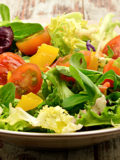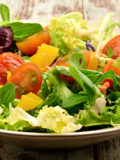


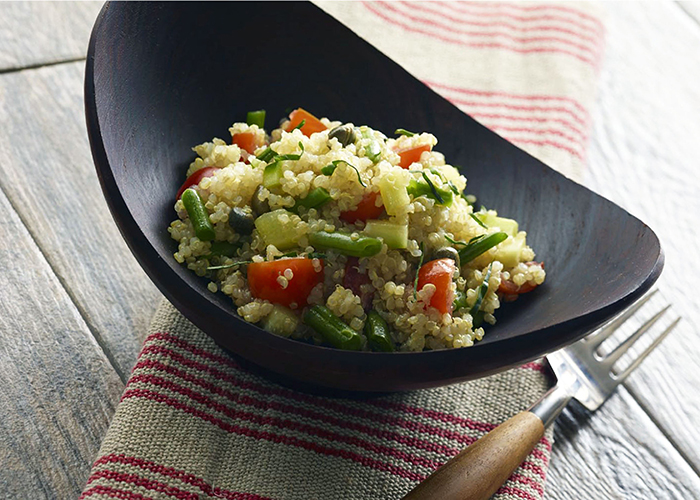
Lemon Basil Quinoa Salad from Super Seeds: The Complete Guide to Cooking with Power-Packed Chia, Quinoa, Flax, Hemp & Amaranth by Kim Lutz. Photo: Bill Milne
The term “superfood” gets a lot of attention—and some skepticism. While there’s no official list, foods that earn the label are typically rich in nutrients like antioxidants, fiber, and essential fatty acids, and are associated with supporting overall health.
And for many people, especially as the years go by, the focus shifts from trendy labels to something more practical: foods that are simple to prepare, satisfying, and genuinely good for you.
One that continues to stand out is quinoa.
Quinoa, the Perfect Protein
Coming in a variety of colors and with a mild, nutty flavor, quinoa is a versatile addition to anyone’s diet. It stores well and works in everything from breakfast bowls to dinner salads.
There’s a reason this South American seed is at the top of so many superfood lists: One cup of cooked quinoa has 8 grams of complete protein and 5 grams of dietary fiber.
Unlike most plant-based foods, quinoa is considered a complete protein, meaning it contains all nine essential amino acids the body needs. That makes it especially appealing for those looking to add more plant-based meals without sacrificing protein.
Originally cultivated in the Andes Mountains of South America, quinoa has been a staple food for centuries. Today, it has found its way into kitchens around the world—not as a trend, but as a practical, nutrient-rich option that fits easily into modern lifestyles.
That nutritional profile becomes even more important over time.
Why Protein Matters More Over Time
As we get older, maintaining muscle mass becomes more important for strength, balance, and overall mobility. Protein plays a key role in that process—and many people simply don’t get enough of it throughout the day.
That doesn’t mean overhauling your entire diet. Often, it’s about making small, consistent choices—like swapping refined grains for more nutrient-dense options.
Quinoa offers an easy way to boost protein intake without relying heavily on meat or processed foods. It’s also naturally gluten-free, making it a good alternative for those with sensitivities or anyone looking to vary their grains.
A Nutrient-Dense Choice
Quinoa is available in a variety of forms including seeds, flakes, flour, pasta and polenta. There are some 1,800 varieties of quinoa, often available in white, red and black colors.
In addition to protein, quinoa provides key nutrients including magnesium, potassium, iron, zinc, and fiber. One cup of cooked quinoa contains about 222 calories, making it a nutrient-dense option that delivers lasting energy without feeling heavy.
It’s this combination—protein, fiber, and essential nutrients—that helps make quinoa satisfying. Meals built around it tend to be more balanced, helping you feel full longer and reducing the temptation to reach for less nutritious snacks later in the day.
Simple to Prepare, Easy to Keep on Hand
Another advantage of quinoa is how quickly it comes together. It cooks in about 15 minutes and can be made in larger batches to use throughout the week.
Once cooked, quinoa stores well in the refrigerator and can be added to a variety of dishes without much effort. That makes it ideal for busy schedules or anyone trying to eat well without spending a lot of time in the kitchen.
A helpful tip: rinse quinoa thoroughly before cooking to remove its natural coating, called saponin, which can give it a slightly bitter taste. Once rinsed, it cooks up light, fluffy, and ready to absorb the flavors of whatever you pair it with.
Easy Ways to Enjoy Quinoa
Quinoa’s versatility makes it easy to incorporate into your routine—whether you’re cooking for one or preparing meals for the week ahead.
- Start your day with a warm quinoa breakfast porridge, topped with fruit, nuts, and a drizzle of honey
- Use it as a base for salads or grain bowls with vegetables and lean protein
- Substitute it for rice or pasta in your favorite dishes
- Add it to soups or stews for extra texture and nutrition
Because it has a mild flavor, quinoa pairs well with both savory and slightly sweet ingredients, making it one of the most practical “healthy swaps” to stick with over time.

A Simple Recipe to Get Started
If you’re new to quinoa—or just looking for a fresh way to enjoy it—this light, flavorful Lemon Basil Quinoa Salad from Super Seeds: The Complete Guide to Cooking with Power-Packed Chia, Quinoa, Flax, Hemp & Amaranth by Kim Lutz is an easy place to begin.
Lemon Basil Quinoa Salad
Makes about 1 cup
- 1 cup haricots verts (French green beans), trimmed and cut into ½-inch pieces
- 1 cup cucumbers, peeled, seeded, and cut into medium dice
- 2 cups basic Quinoa
- 10 cherry tomatoes, quartered
- 2 tablespoons plus 1 teaspoon capers, rinsed
- 2 tablespoons thinly sliced basil
- 1 tablespoon fresh lemon juice
- 1 tablespoon olive oil
- Salt and freshly ground black pepper
In a large bowl, toss all ingredients to combine.
Reprinted with permission from Super Seeds. The Complete Guide to Cooking with Power-Packed Chia, Quinoa, Flax, Hemp & Amaranth by Kim Lutz, published by Sterling Publishing Co. Photographs by Bill Milne.